

Free tool
Hot water is usually the second biggest thing on a household energy bill, and the gap between the cheapest and dearest way of making it is bigger than most people expect. Put your household in below - and your own rates, if you have a bill handy.
People in the house
Hot water used a day
Typical for this. Takes 8.2 kWh of heat a day to make.
What have you got now?
Not sure what you’ve got? Here’s how to find out ↓Know your tank size? Optional
It’s the big number on the data plate, and often in the model number too. Picking it sets the daily use above to what a household that size normally draws.
Gas at your place
Showing
Switching from Electric storage to Solar with gas boost saves about $626 a year.
Running cost comparison
The wrench rating under each one is what it costs to fit, which often runs the opposite way to what it costs to run.
Solar with gas boost
Cheapest$229/yr
4,587 MJ a year at 5c/MJ
Same collectors, but boosted by gas instead. Usually the cheapest to run - provided you already have gas for other things.
This means adding gas
Going from electric to gas is not just a new unit. It needs a gas line run to wherever the unit sits, and if the house has no gas at all, a whole new connection and meter as well. That work is usually the biggest single cost in the change, and it can outweigh years of the running-cost saving.
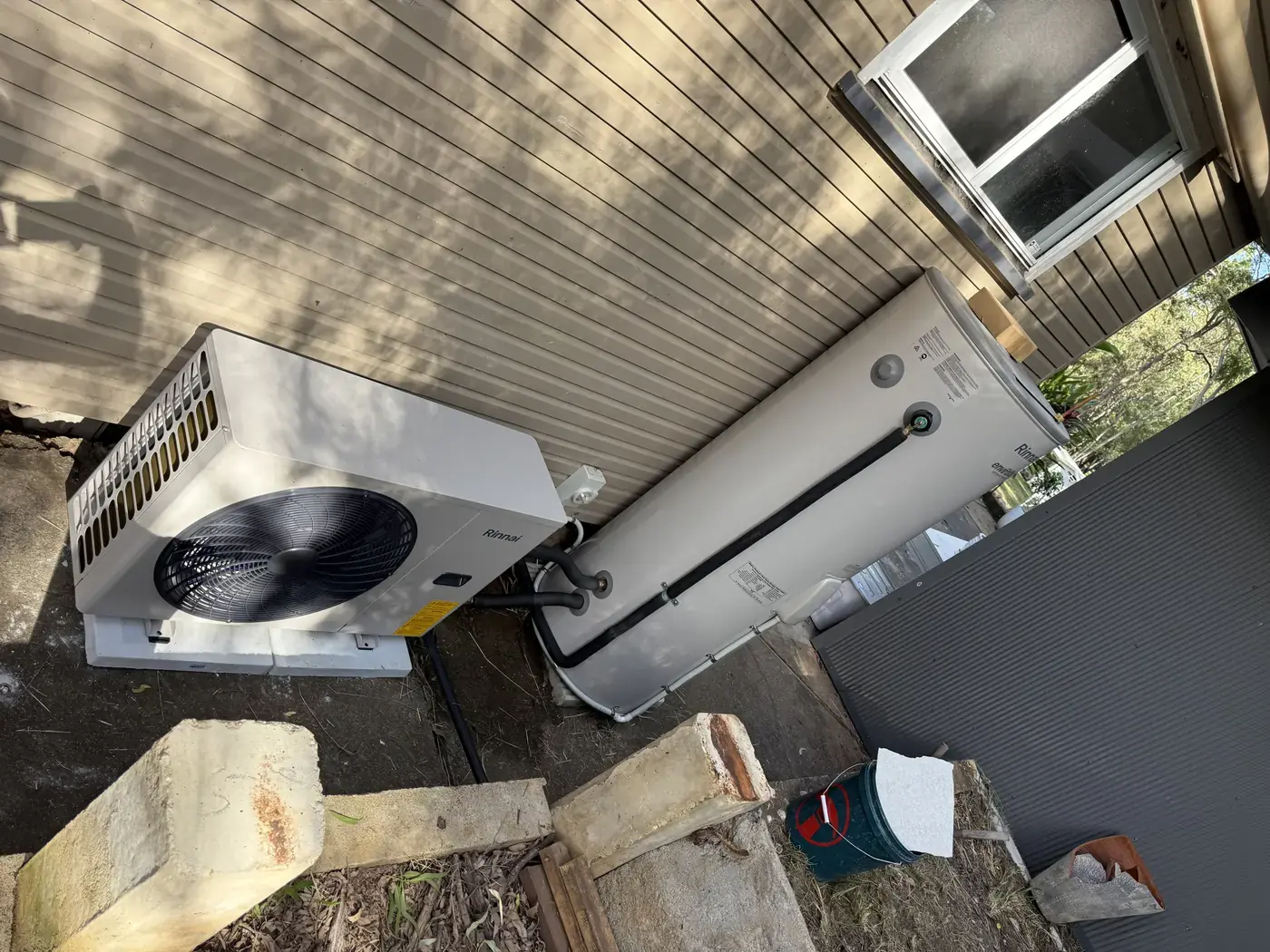
Heat pump
$262/yr
1,091 kWh a year at 24c/kWh
Moves heat out of the air instead of generating it, so it delivers roughly three units of heat per unit of power. Brisbane's warm air is close to ideal for it.
Usually the easy swap
Electric to heat pump is generally the simplest change - same power, often the same spot. One thing to check: if your tank is on a controlled-load circuit it only gets power overnight, and a heat pump is better off running in the warmer part of the day. That may mean moving it onto a normal circuit.
Solar with electric boost
$279/yr
1,164 kWh a year at 24c/kWh
Roof collectors do most of the work here. The booster only covers cloudy runs and winter mornings.
Roof work involved
Collectors have to go on the roof, be mounted properly, and be plumbed up and back. It is the most involved install of any of these, and it needs roof space facing roughly north to be worth doing.
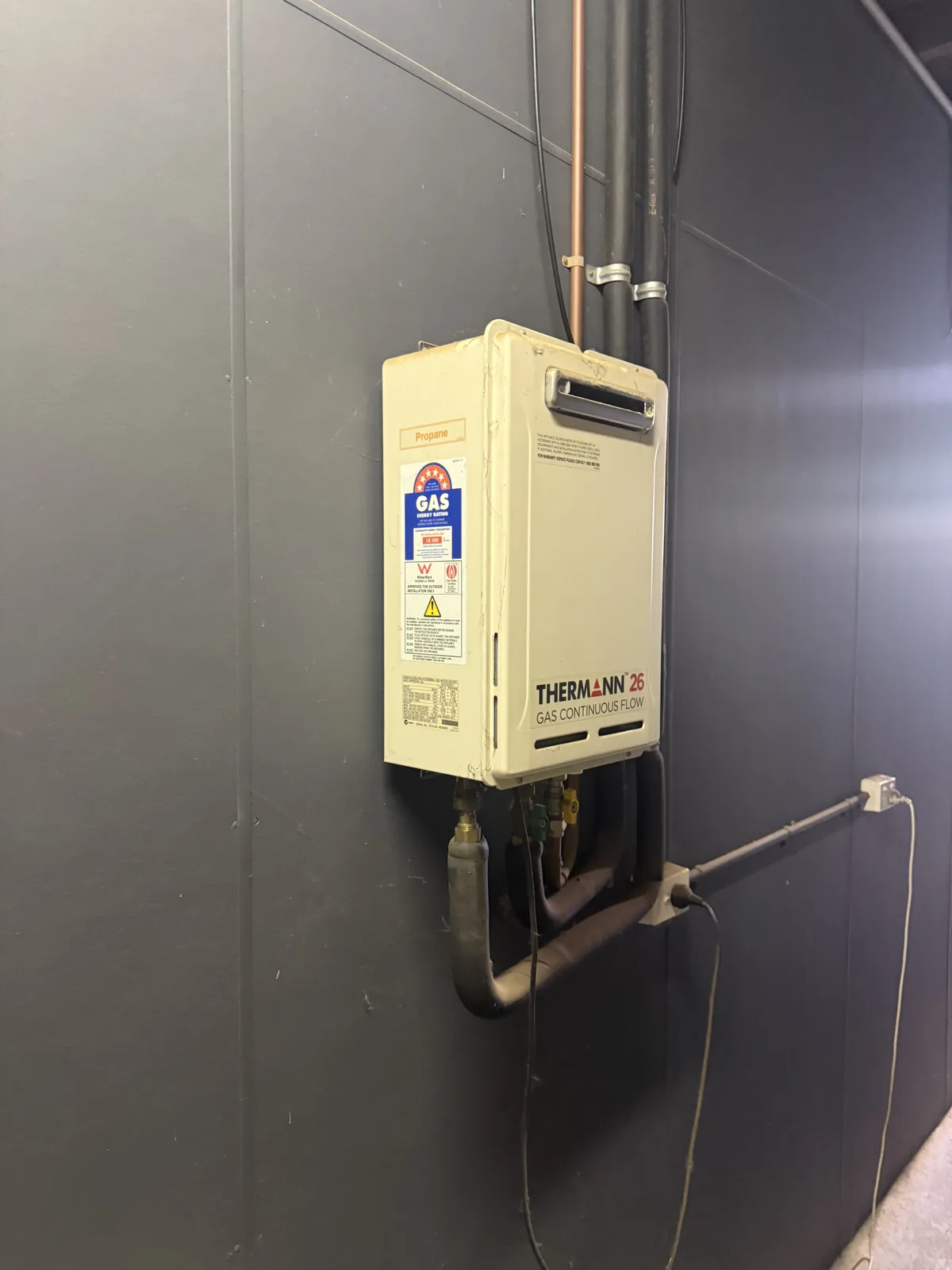
Gas continuous flow
$638/yr
12,769 MJ a year at 5c/MJ
Heats only what you draw, so there is no tank sitting there losing heat. The efficiency gain over a gas tank is mostly that.
This means adding gas
Going from electric to gas is not just a new unit. It needs a gas line run to wherever the unit sits, and if the house has no gas at all, a whole new connection and meter as well. That work is usually the biggest single cost in the change, and it can outweigh years of the running-cost saving.
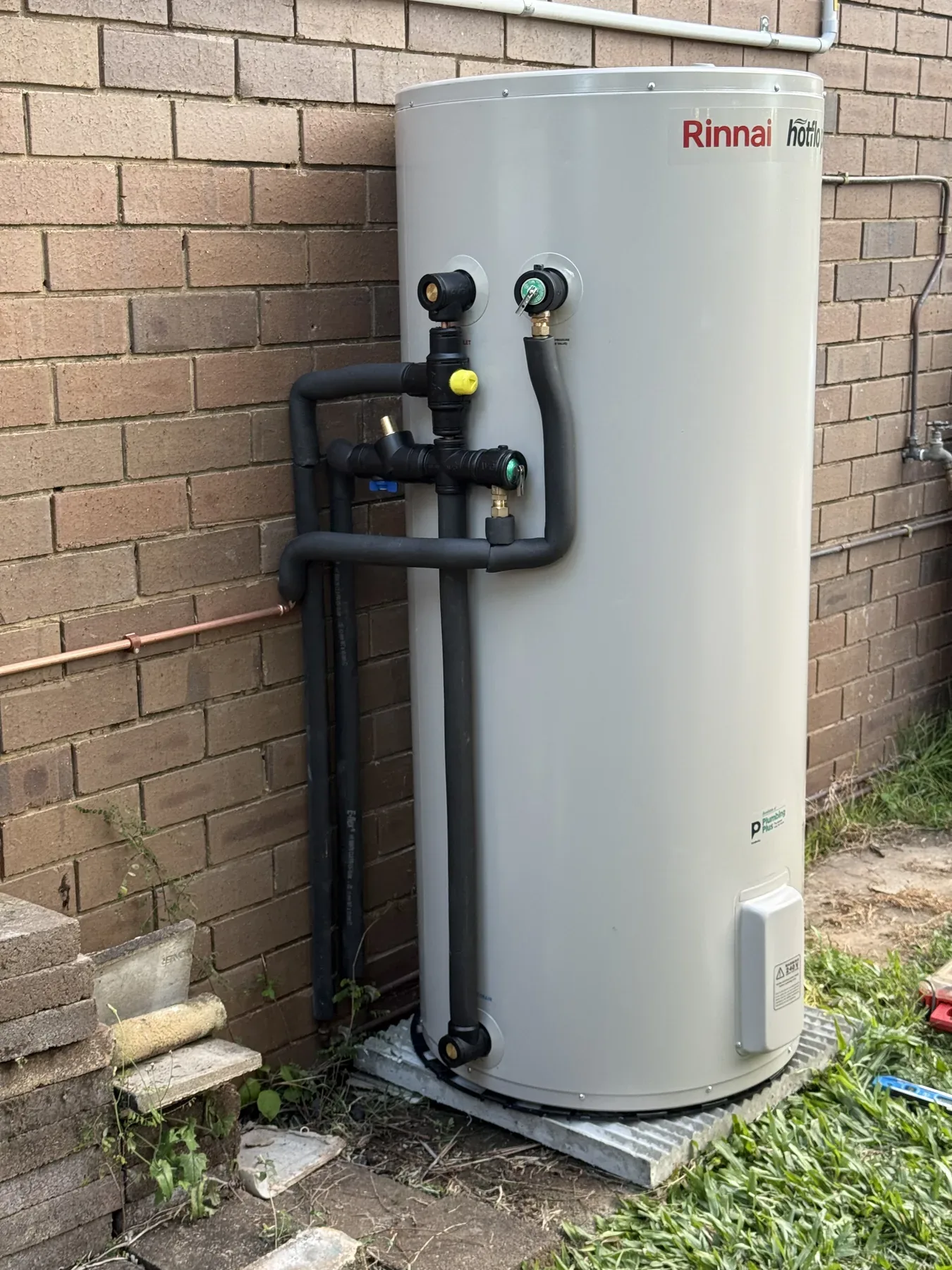
Electric storage
Yours$855/yr
3,563 kWh a year at 24c/kWh
The element itself is 100% efficient - every unit of power becomes heat. What costs you is the tariff and the heat leaking out of the tank all day.
Gas storage
$896/yr
17,917 MJ a year at 5c/MJ
A flue runs up the middle of the tank, so it loses heat faster than an electric one and a pilot burns around the clock.
This means adding gas
Going from electric to gas is not just a new unit. It needs a gas line run to wherever the unit sits, and if the house has no gas at all, a whole new connection and meter as well. That work is usually the biggest single cost in the change, and it can outweigh years of the running-cost saving.
How this is worked out
Heating 180 litres from 21°C mains water to 60°C needs 8.2 kWh of heat a day. Each system buys that heat at a different efficiency - a heat pump around 320%, gas continuous flow around 84%, an electric element 100% but at a much dearer rate per unit. Tank systems also lose heat while they sit there, which is counted. Solar is modelled at a 68% yearly solar fraction, which is realistic for Brisbane sun.
These are estimates for comparing options, not a quote or a bill prediction. Your actual usage, tariff and the age of your unit will move the numbers around.
Want to know what suits your place? Roof aspect, gas connection and where the old unit sits all matter.
Get adviceWorking out what you have
Where to find the data plate.
Every hot water system has a plate on it with the model, the capacity and the date it was made. Where it hides depends on the type - and on an outdoor unit it may have faded past reading, which is worth knowing before you go hunting.
Electric storage tank
How to tell it’s this one
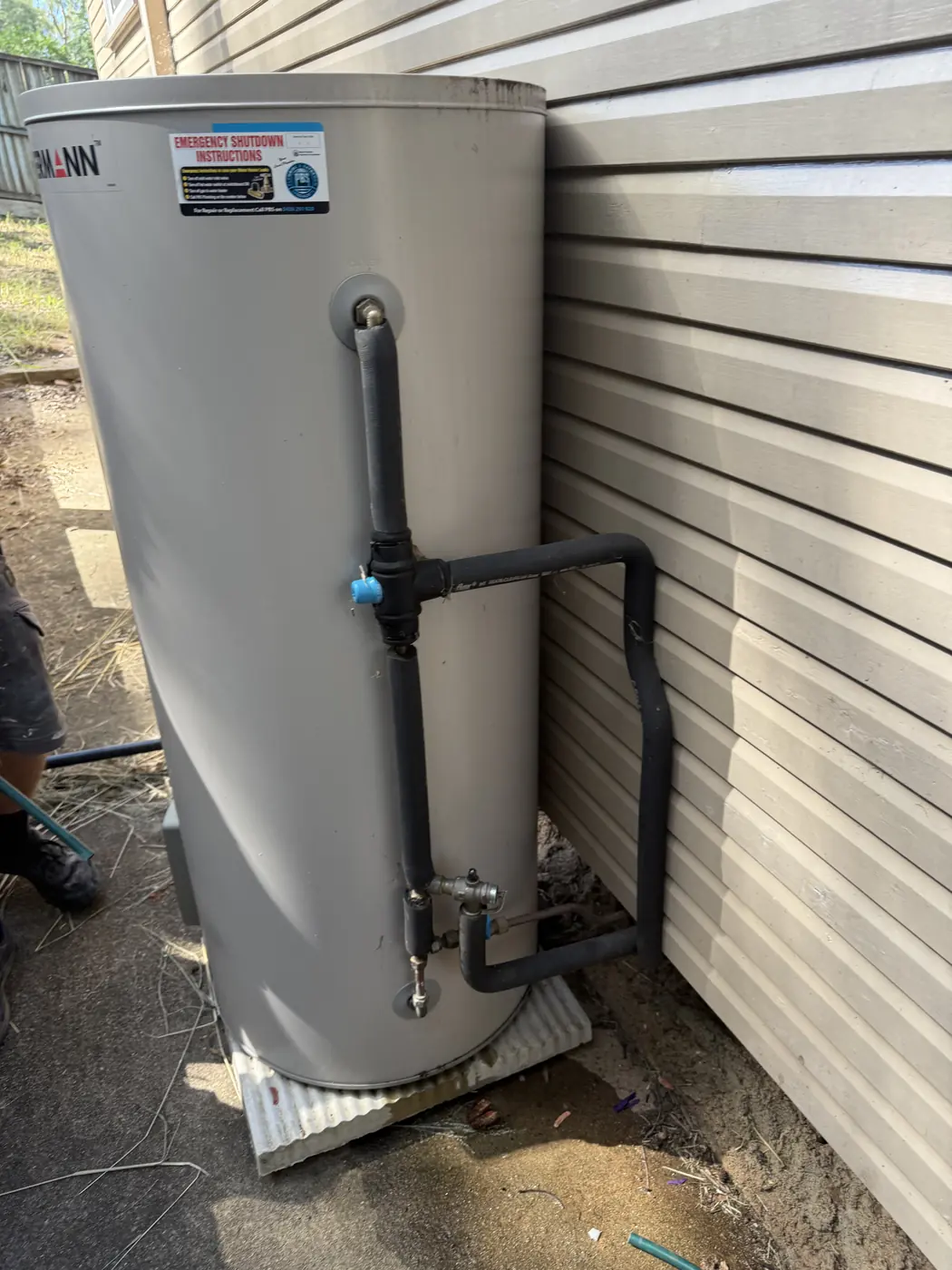
A tall cylinder, usually cream or white, standing on the ground or on a small stand. No flue on top and no gas line running to it - just a water pipe each side and an electrical cable.
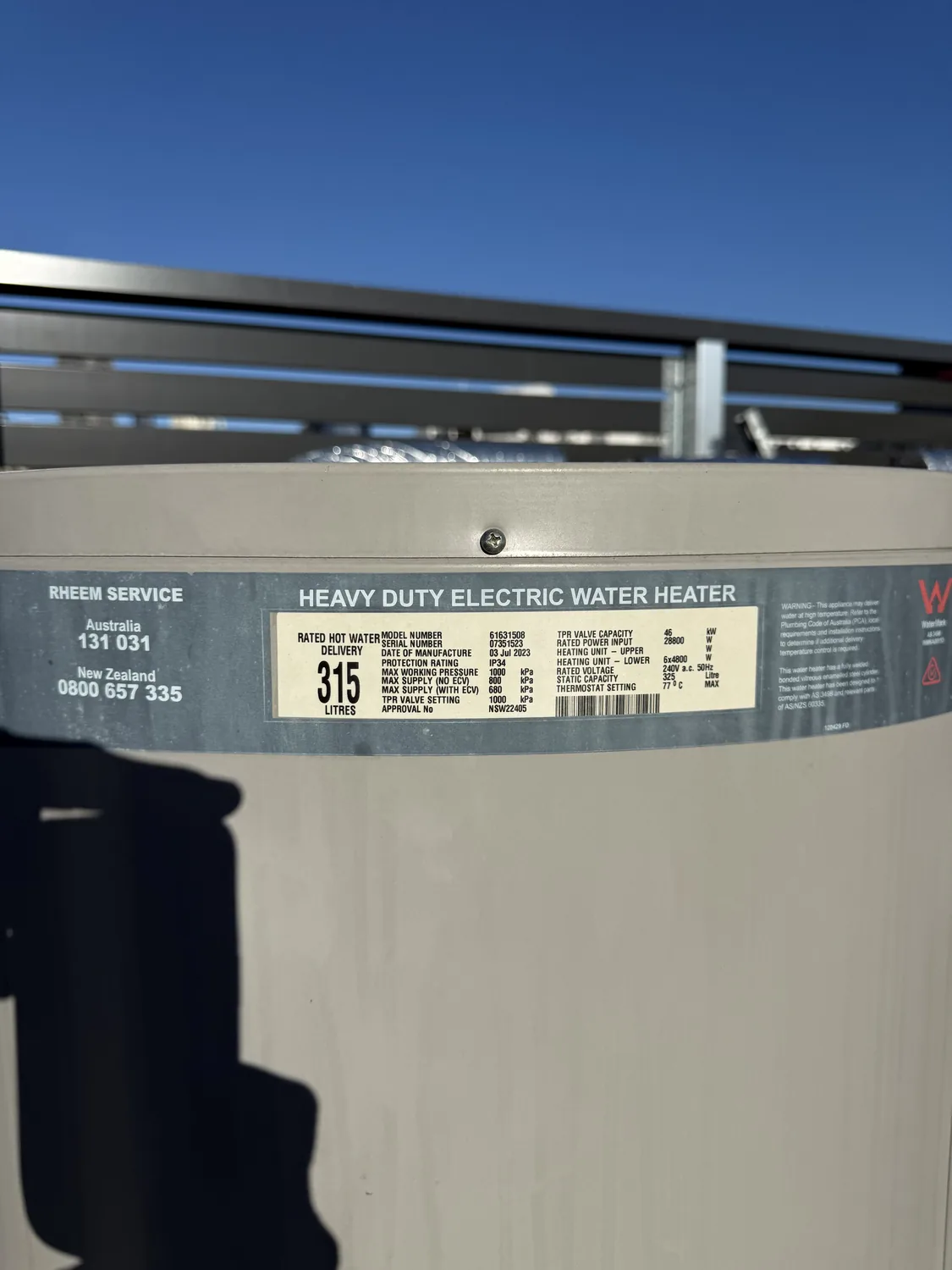
Where the plate is
On the side of the tank, up high. Look at about chest to head height, facing whichever way is easiest to read from.
If the unit is outside in the sun, the plate is often faded to the point of being unreadable - UV kills them. If you can't make it out, don't worry about it; tell us the rough age and we'll work it out on site.
What to write down
- Model number
- Storage capacity in litres - often the big number in the model, like 250 or 315
- Date of manufacture
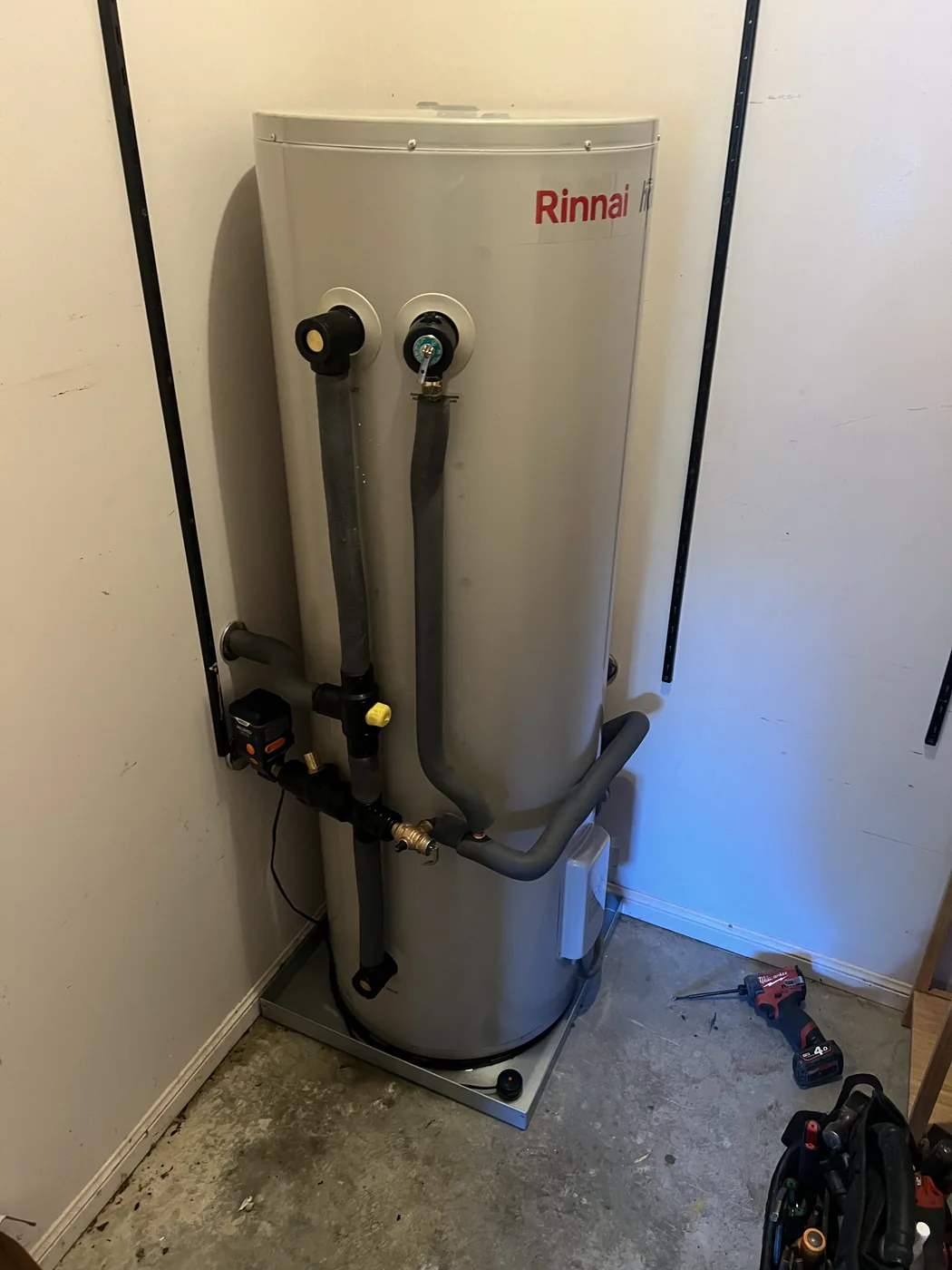
Gas storage tank
How to tell it’s this one
Same tall cylinder shape as an electric tank, but with a flue cowl on top and a gas line running into a control box near the bottom.
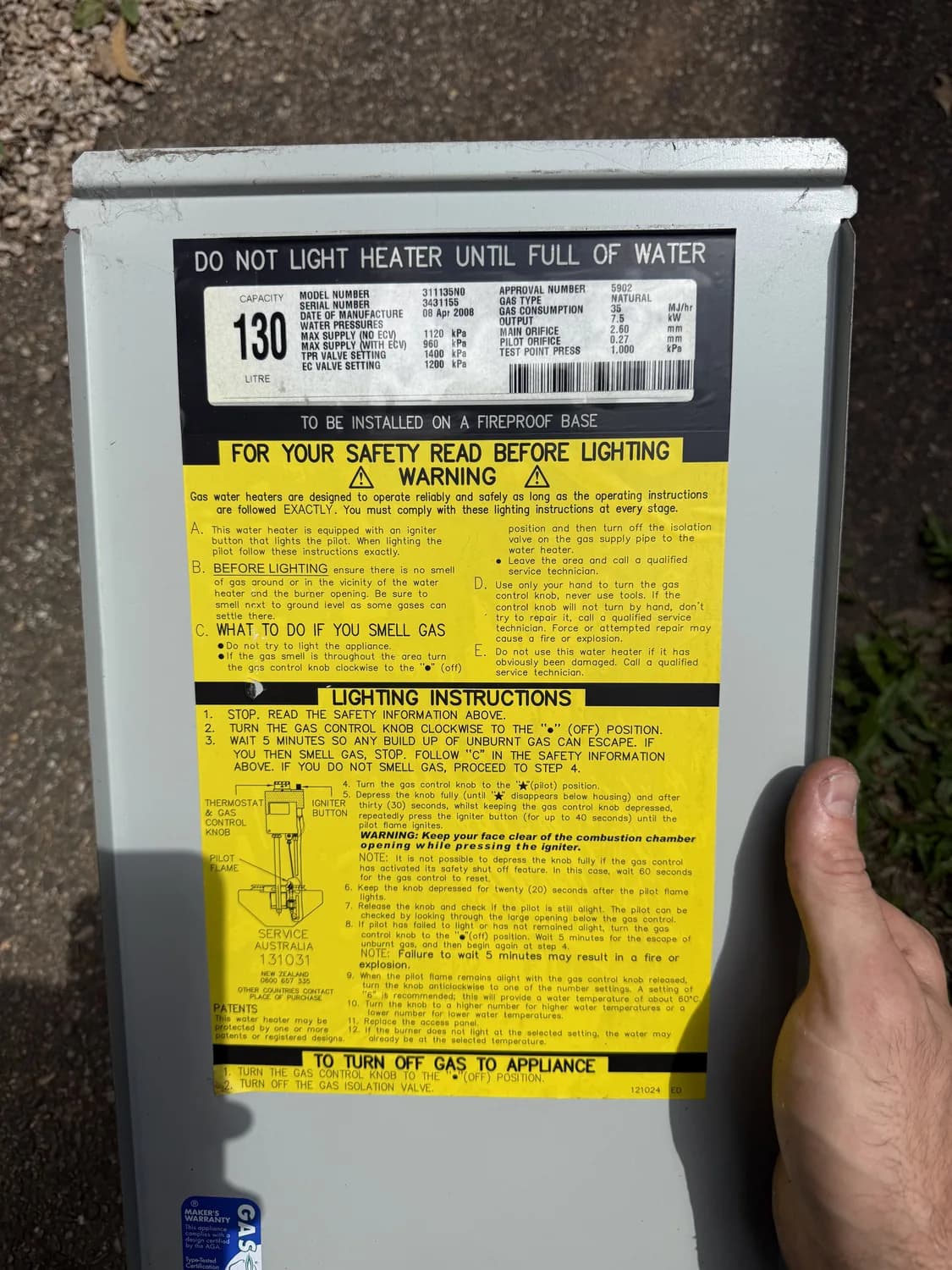
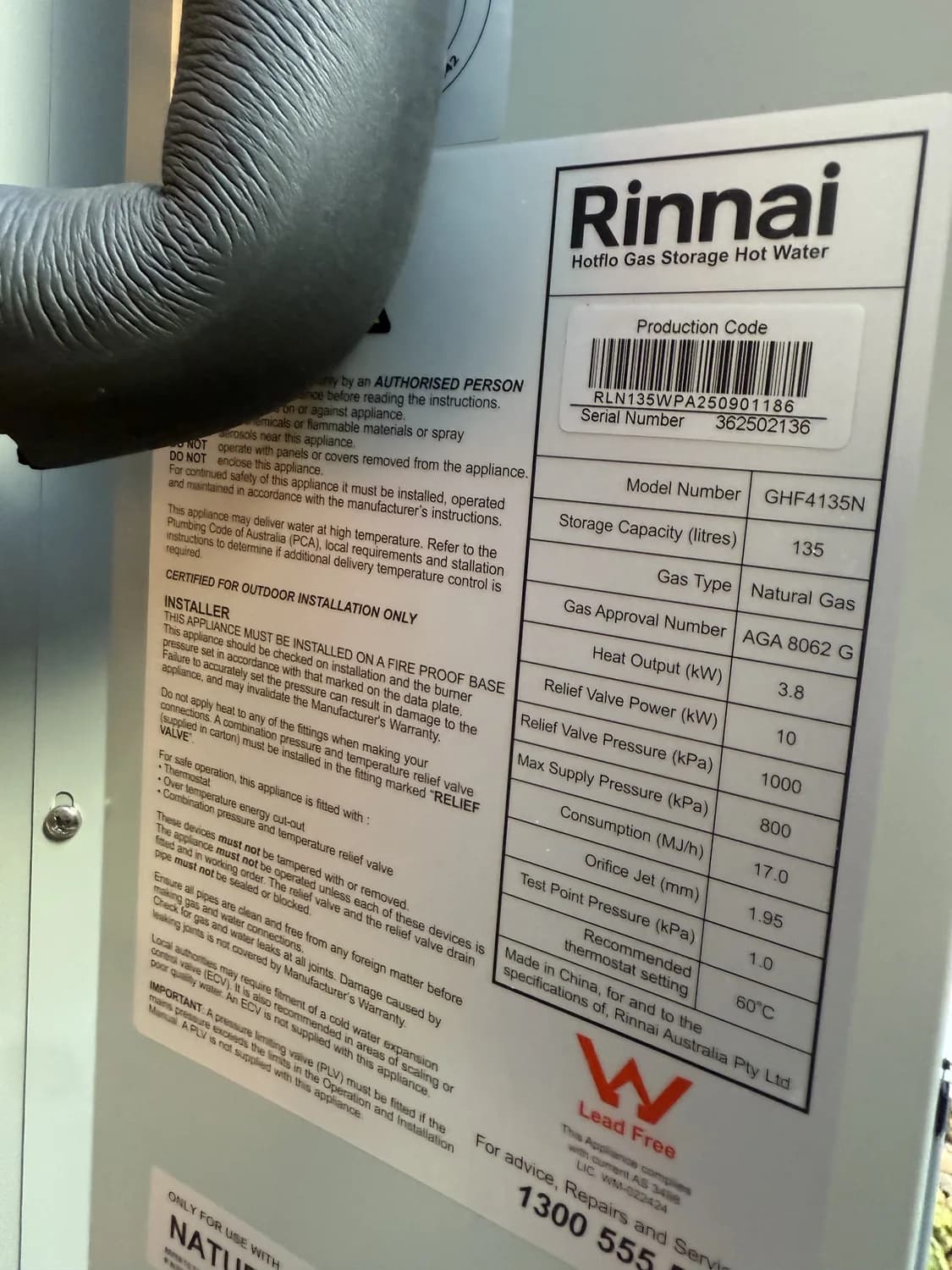
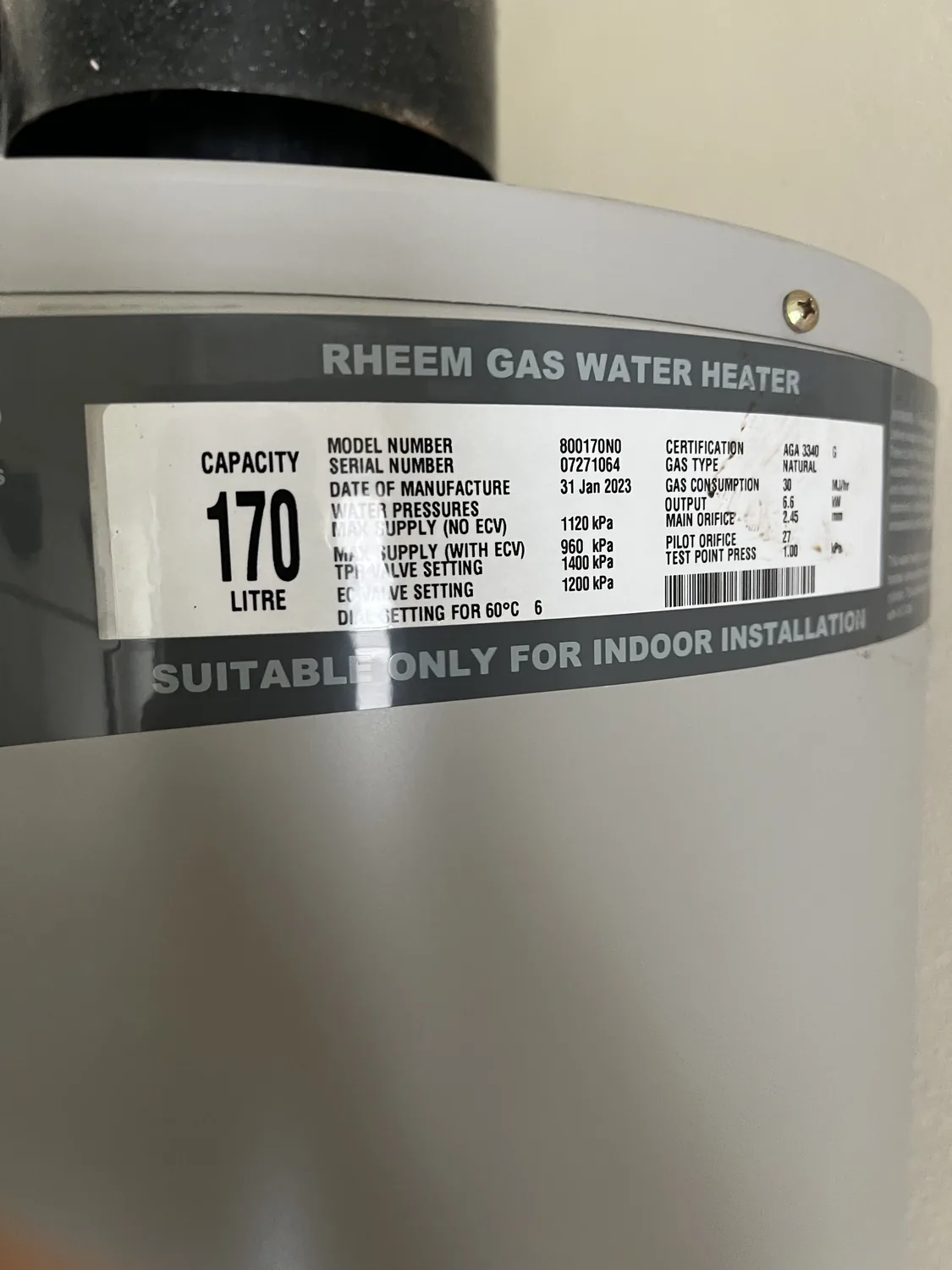
Where the plate is
Inside the gas control valve cover - the box down near the base. Pop that cover off and the plate is behind it.
Because it lives behind a cover, this one is usually still perfectly readable even on an old unit. It is the easiest of the lot to read, once you know to look there.
What to write down
- Model number
- Storage capacity in litres
- Gas type - natural gas or propane/LPG
- Production code and serial number
Continuous flow (instant) unit
How to tell it’s this one
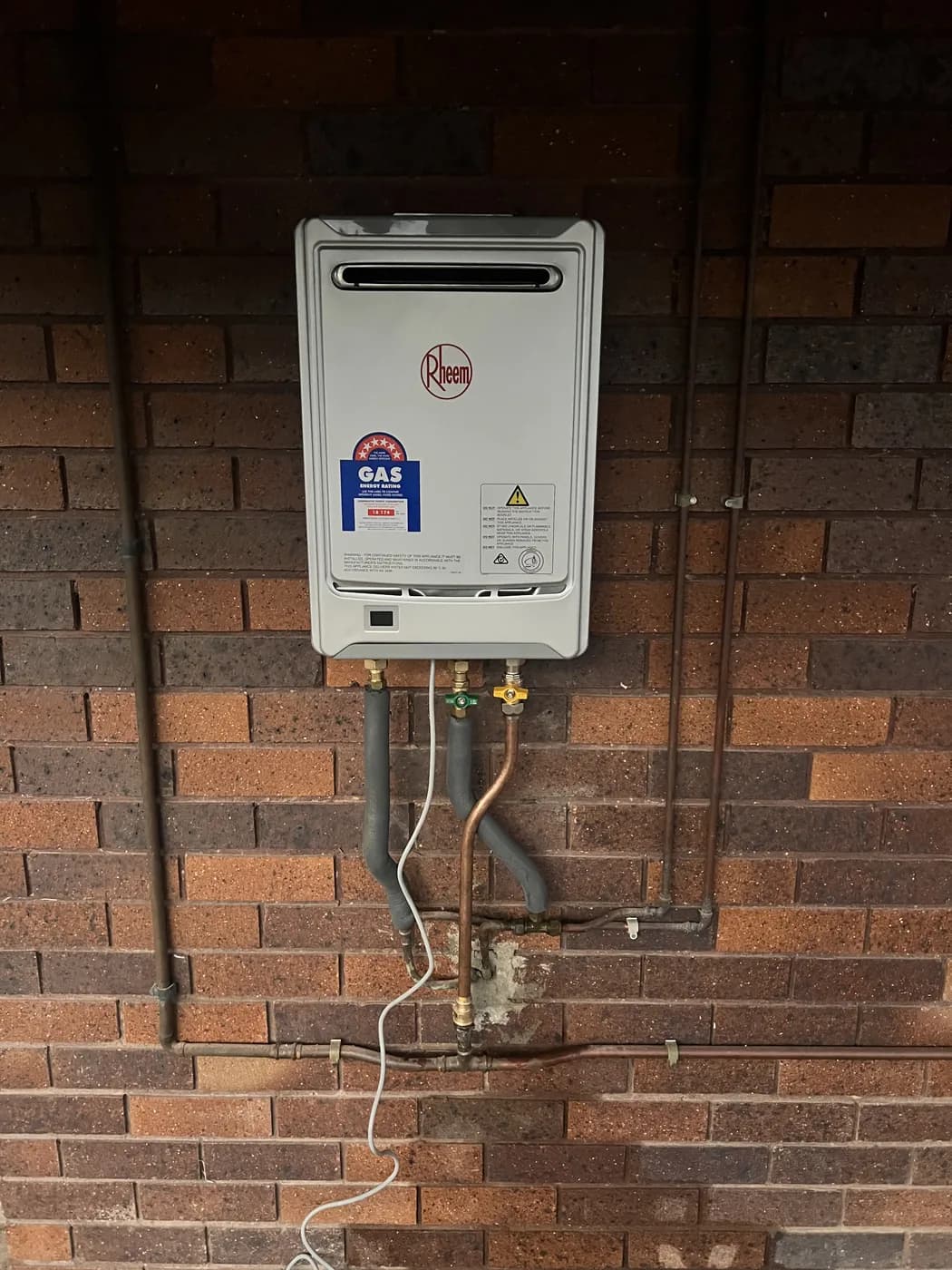
A flat rectangular box on the wall, roughly the size of a small suitcase. No tank at all. Water and gas pipes run into the bottom.
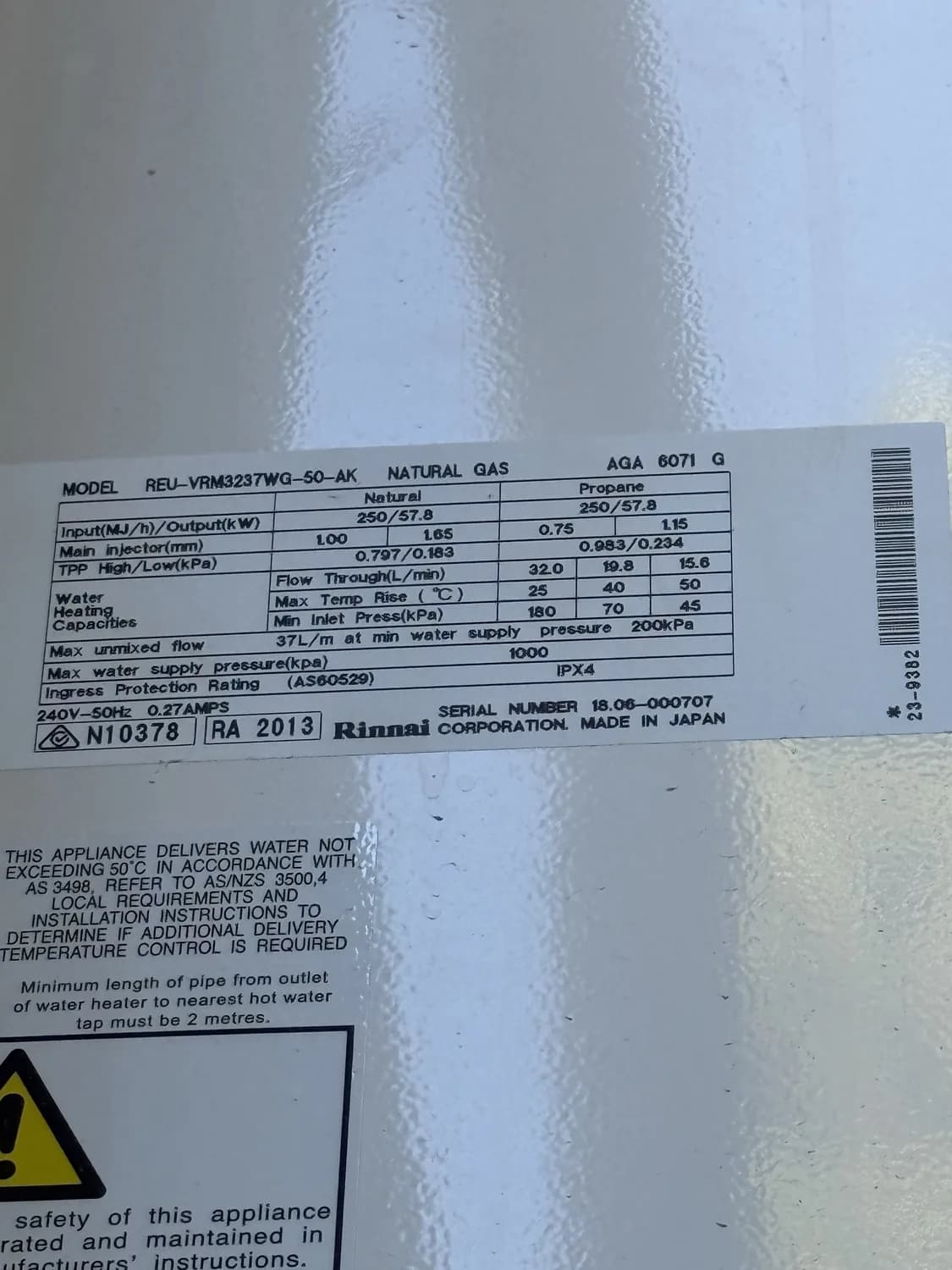
Where the plate is
On the side of the unit, usually the right-hand side as you look at it. Some have it on the front under the cover.
Same UV problem as the electric tanks - an external unit that has been in full sun for years often has a plate you can barely read. The model number is sometimes also printed inside the front cover, which survives better.
What to write down
- Model number
- Gas type - natural or propane
- Flow rate in litres per minute, often shown as a temperature rise table
Heat pump
How to tell it’s this one
A tank like an electric unit, but with a bulkier housing on top holding the compressor and fan - and you will hear it running.
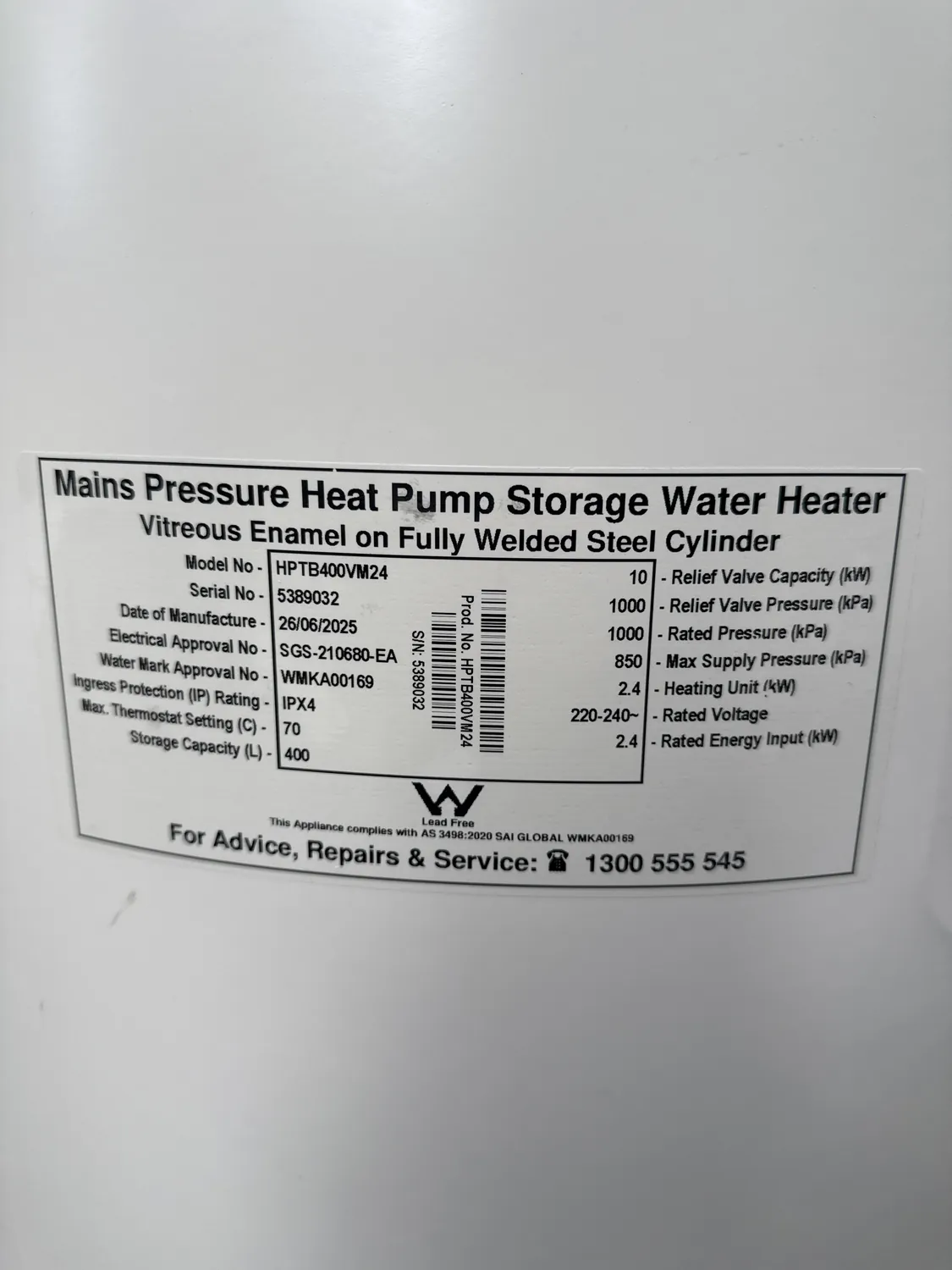
Where the plate is
On the side of the tank, up high - same place as a standard electric.
Heat pumps are newer, so the plate is usually still legible. Worth also noting the brand on the front, since the compressor is often the part that matters for servicing.
What to write down
- Model number
- Storage capacity in litres
- Date of manufacture
Can’t find it, or it’s faded past reading? Not a problem - a photo of the whole unit and a rough idea of its age is plenty for us to go on.
Good to know
Questions this raises.
Is a heat pump really that much cheaper to run?
Yes, and Brisbane is close to the best climate in the country for one. A heat pump moves heat out of the air rather than making it, so it delivers roughly three units of heat for every unit of power. Against an electric element it is the single biggest running-cost saving available in hot water.
Why does gas look worse here than I expected?
Usually the daily supply charge. Gas is often cheap per megajoule, but you pay to be connected every day whether you use it or not. If hot water is the only gas appliance in the house, that charge belongs to your hot water - and it can be a few hundred dollars a year before you have heated a single litre. Turn the 'I use gas for other things' switch off and you will see it appear.
Does this include what the system costs to buy and install?
No. This is running cost only - what the energy costs. Purchase and installation depend on your site, and we would rather quote your actual job than publish a number that turns out to be wrong for you.
How accurate is it?
It is a model, not a meter. The physics is exact, the efficiencies are published ranges, and the default rates are typical South East Queensland ones. Put your own rates in from your bill and it gets considerably closer. Use it to see the size of the gap between options, not to predict your bill to the dollar.
Ready to work out which one?
Running cost is one part of it. Roof aspect, whether you have gas, where the old unit sits and how much space there is all decide what actually fits. Read the buyers guide next, or just ask us.